
When thinking about planting something instead of your common lawn, there’s a whole range of different options to consider. Rather than picking one perfect option that everyone should use, we think of this as a menu of options.
Low-Grow Fine Fescues

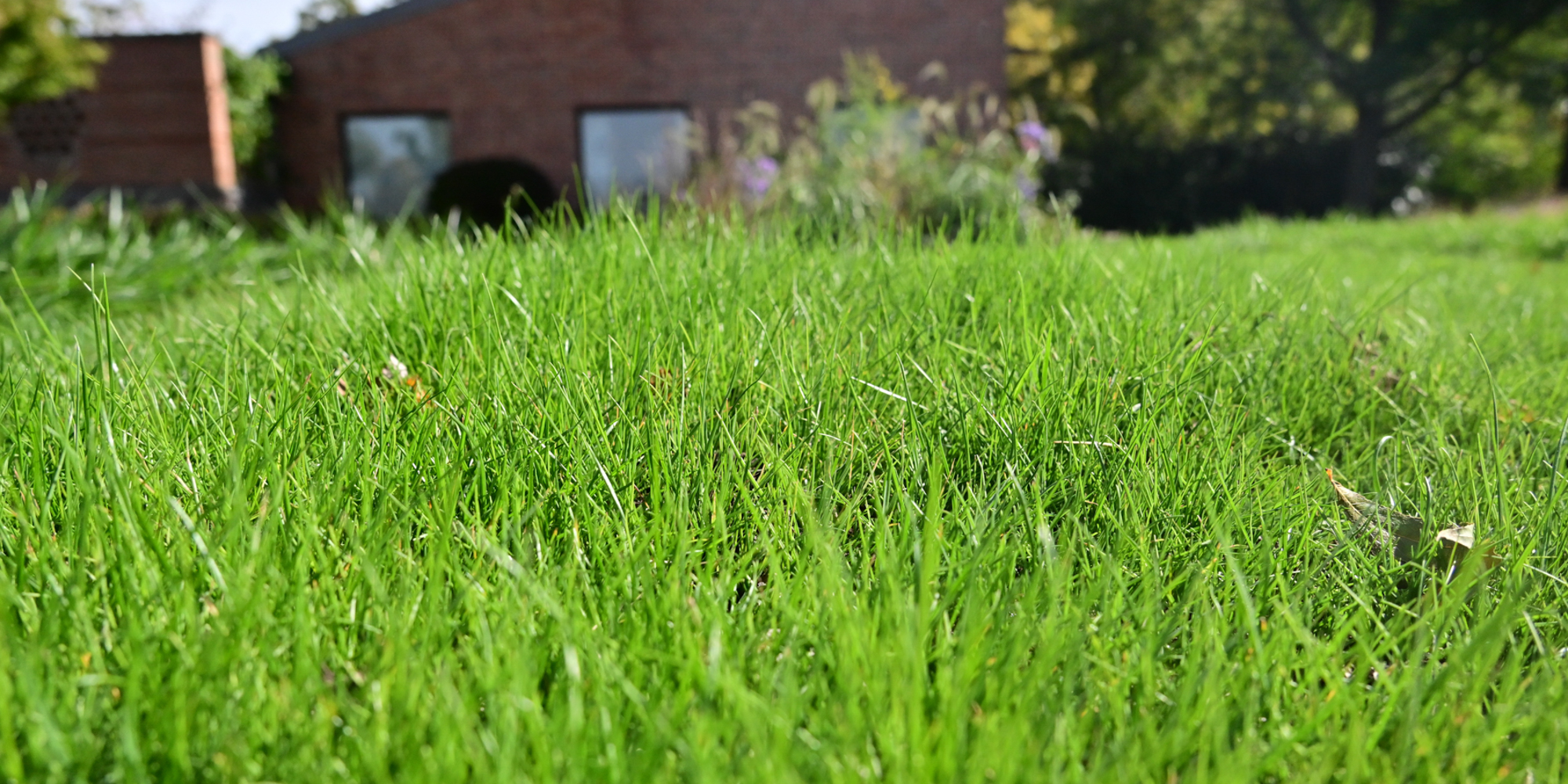
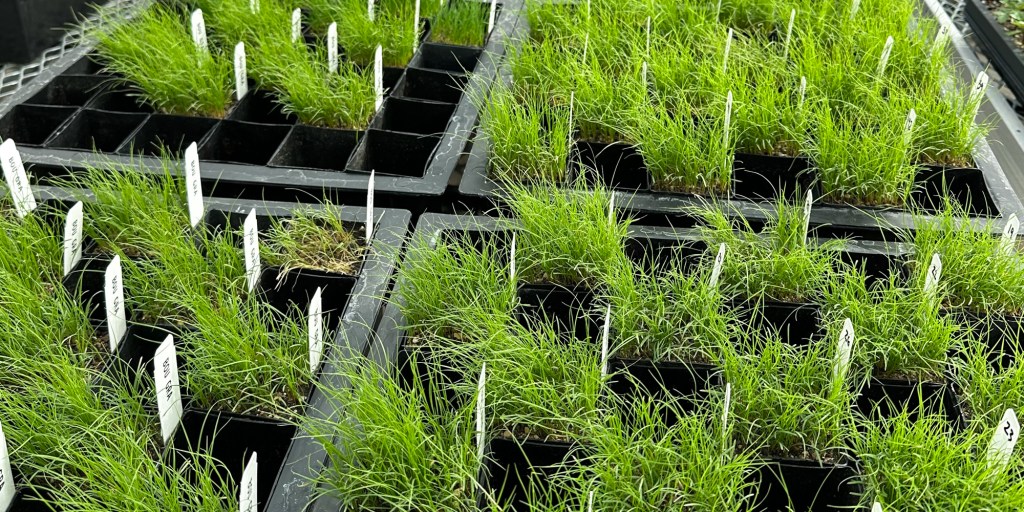
While non-native, fine fescue mixes, sometimes called “ecograss” “low-grow” or “no-mow”, have been presented as a more environmentally-friendly grass option. Skinnier and slow to grow, the idea is that they require less mowing and less watering, so they’re better for the planet. Your milage may vary, but our greenhouse studies have shown that they actually have pretty great roots.
White or Dutch or Micro Clover

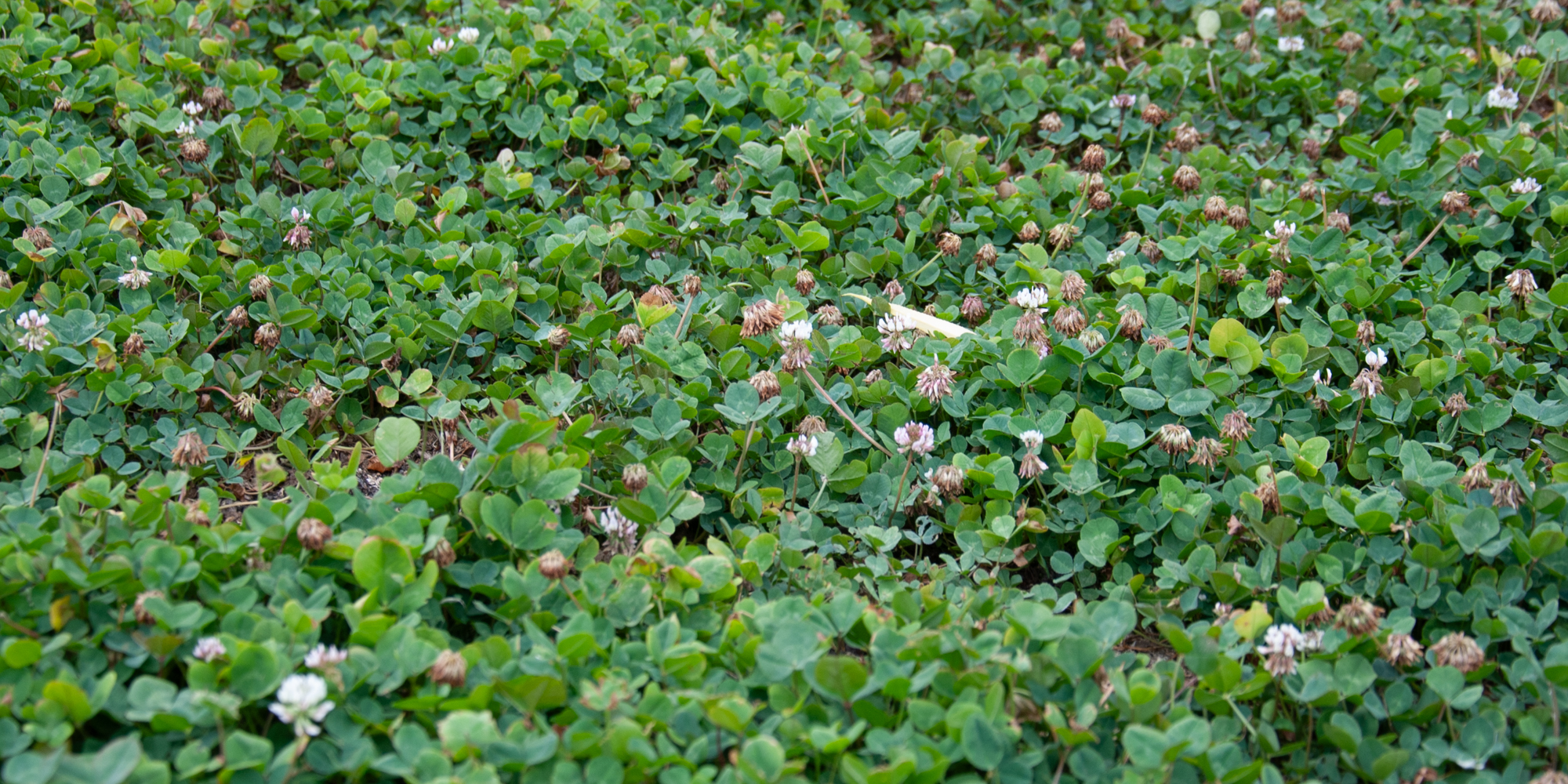
Again, a non-native species. The good parts of clover are that its very cheap and easy to install, and that it provides some resources to pollinators. Now, how much does it actually support native pollinators? That’s complicated. Some generalists will use clover, but many native pollinators will not. We know for sure that honeybees love it, but it’s important to remember that they’re more like feral livestock than wild animals.
One issue is that clover doesn’t love winter.
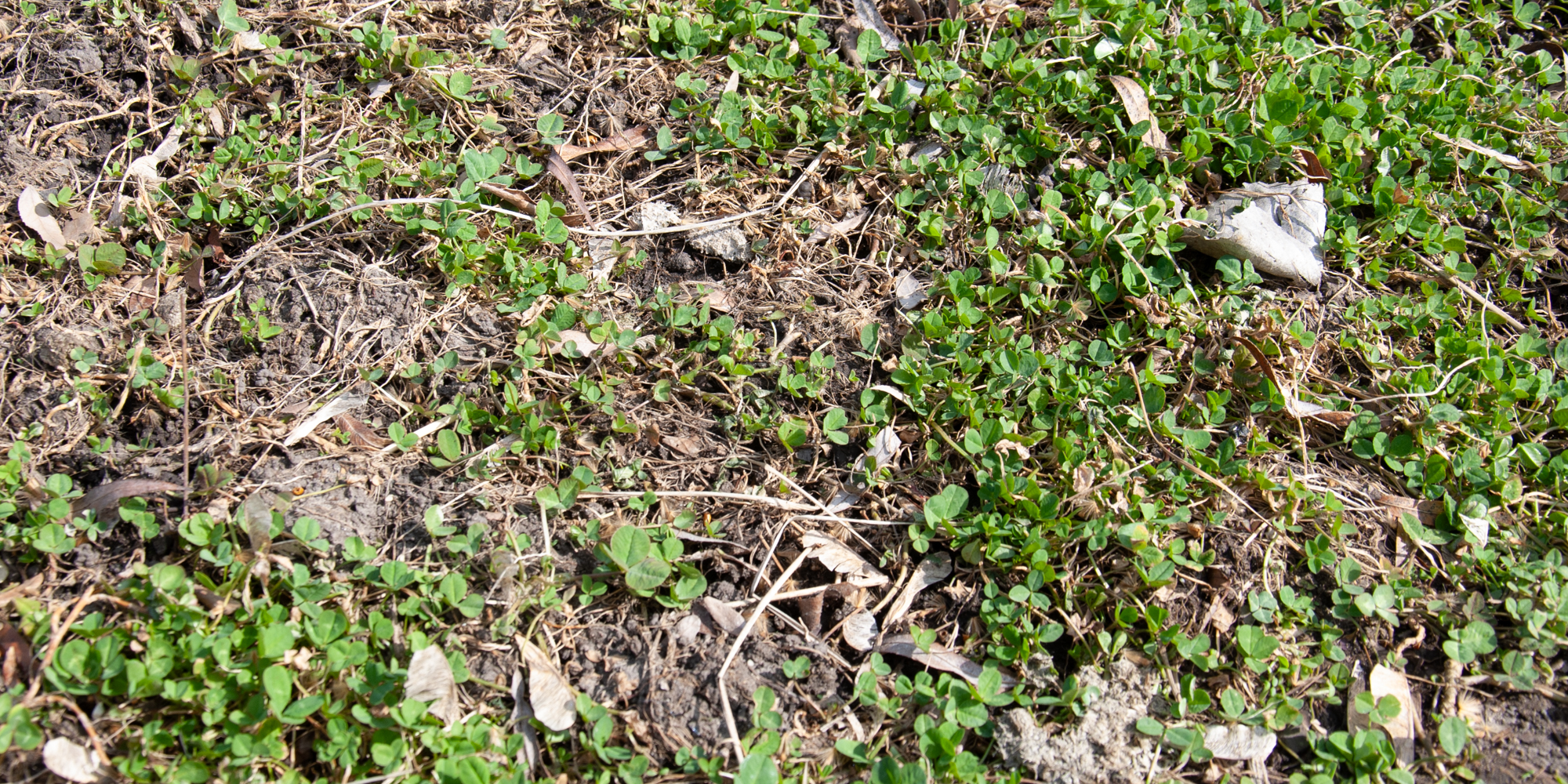
As a solution to this issue, many sources recommend sowing clover into your established lawn or seeding it with lawn, so that in the winter, the clover may recede, but lawn grass sticks around.


Other Grass Options

There’s a whole range of different native grasses out there. We have only just begun to explore the options. One of the decisions you may have to make is if you want to keep mowing or not. Greenhouse trials have shown that our native grasses will tolerate sustained mowing, though their width and toughness vary from species to species.

Sedges (The Carex Family)

Sedges aren’t quite grasses, but they behave and look in a similar way. With blade widths ranging from the skinniest 1 mm to the chunky 2 inch, sedges often tend to clump and remain short. Rather than continuing to grow upward, most sedges tend to flop over.
The most famous of the sedges in the nursery market right now is Carex pensylvanica or “Penn sedge.” It has a very similar coloring to standard Kentucky bluegrass, and never grows taller than 8 inches. Instead of shooting straight up, it gracefully flops over.

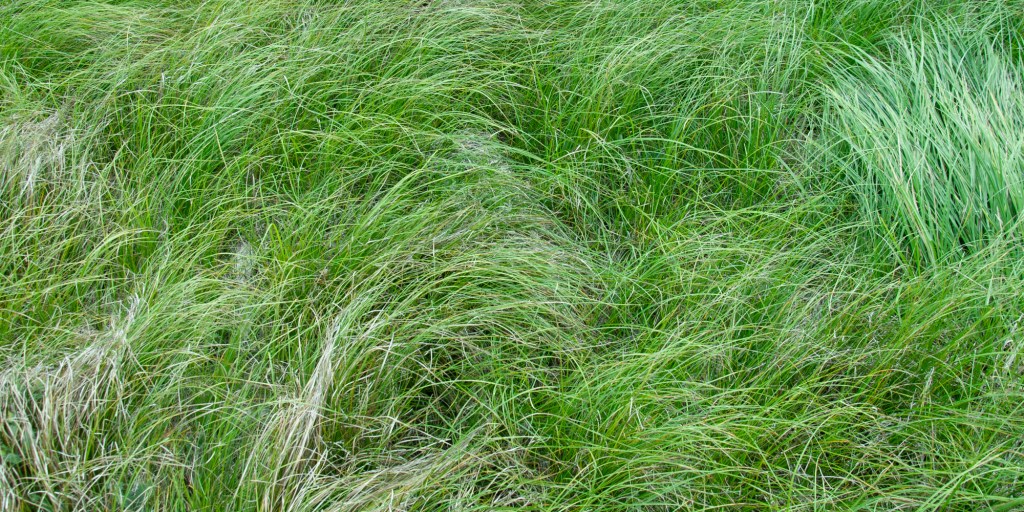
Native Short-growing Native Plants

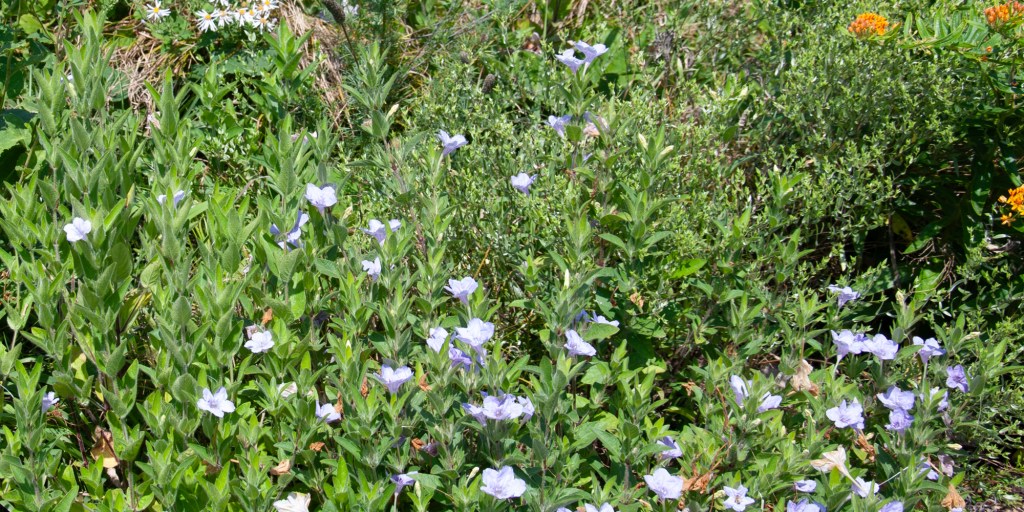
Among the flowering native plants of Eastern North America, there are many who can make really appealing groundcovers. Rather than using a grass-like plant, some of these leafy beauties can fill your landscape with color and texture season-round. Wild strawberry is particularly stubborn and wonderful, if you don’t mind it taking over everywhere.
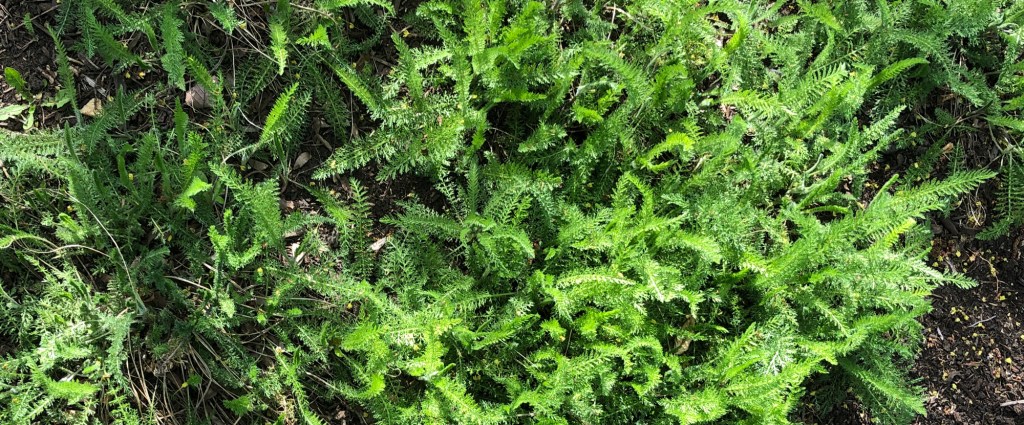
A vital selection factor is how the plant lingers in winter. Many native wildflowers disappear in the off-season, but some do stick around in the cold of winter.

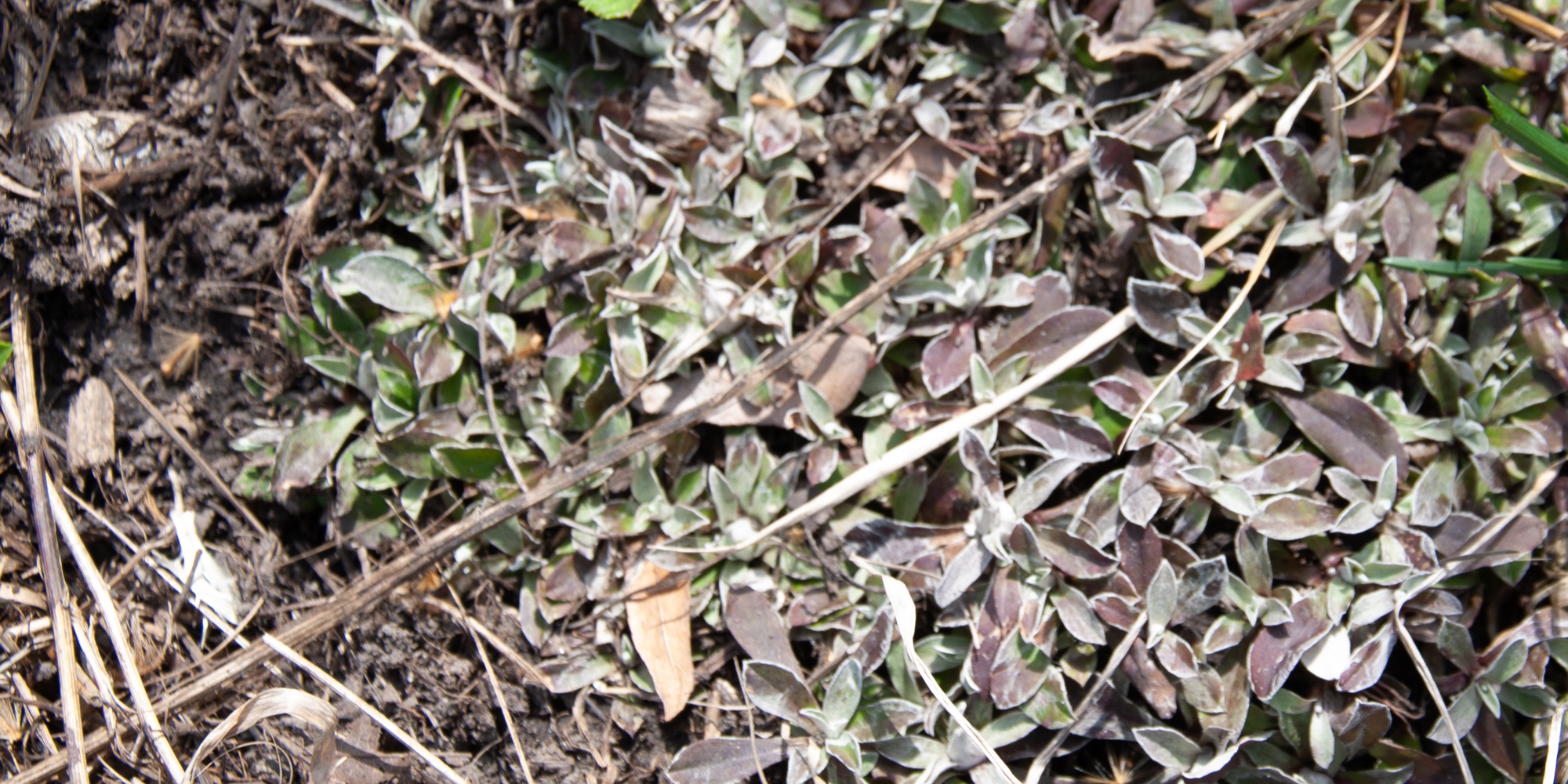


Mixing Native Grass-like Plants and Flowers
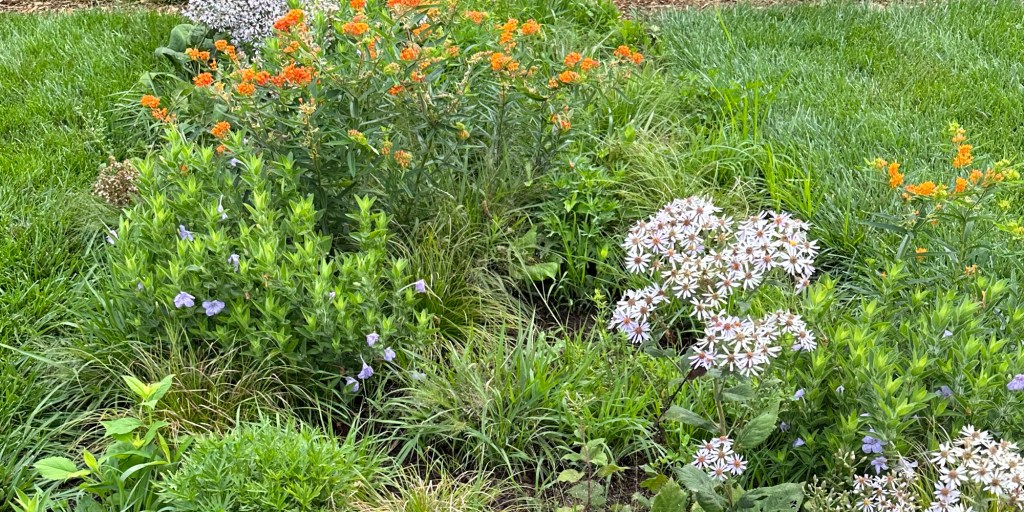
Now, this requires challenging what we think a lawn should look like, but mixing grassy plants and flowers creates beauty and interest. Selecting species that grow over the season creates a variety of textures and supports native pollinators all season long.


 Rethinking Lawns