
One of the ways plants help people is by reducing the impacts of climate change. Global climate change is driven by too many greenhouse gasses like CO2 in the air. Plants help reduce these effects by trapping that carbon in the ground. Different plants and landscape types can trap more or less carbon, and we’re still learning about which ones do it best.
When plants photosynthesize, they capture carbon (CO2) from the air to build themselves up. We get the oxygen (O2) and the plants keep the carbon to build leaves and roots. Once dead leaves and roots decay, they leave carbon behind in the soil.
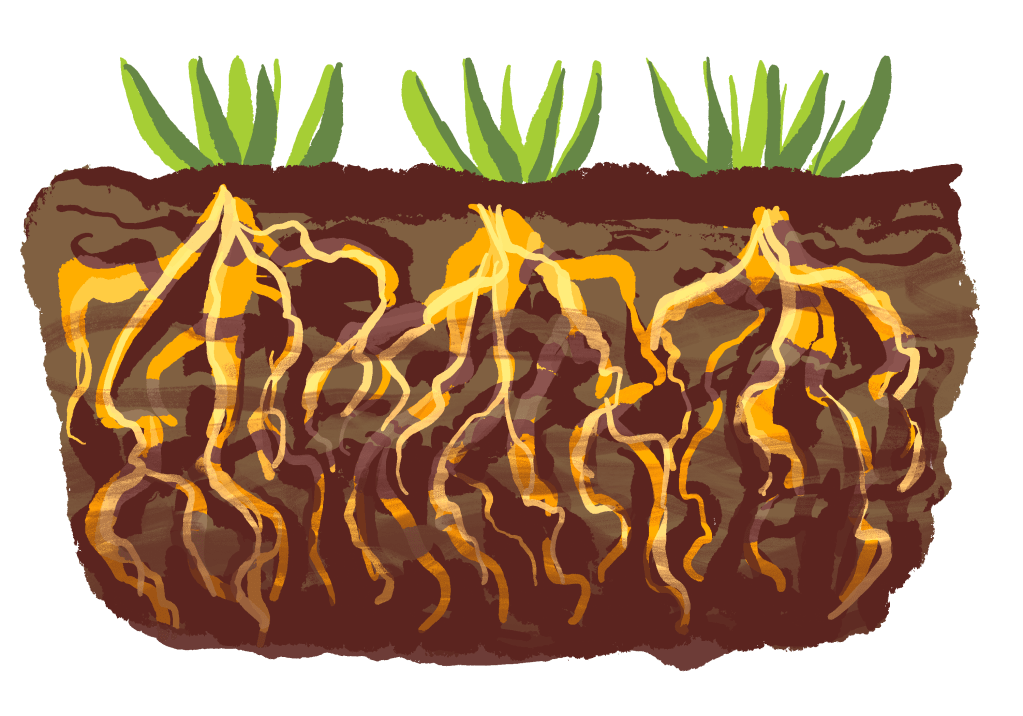
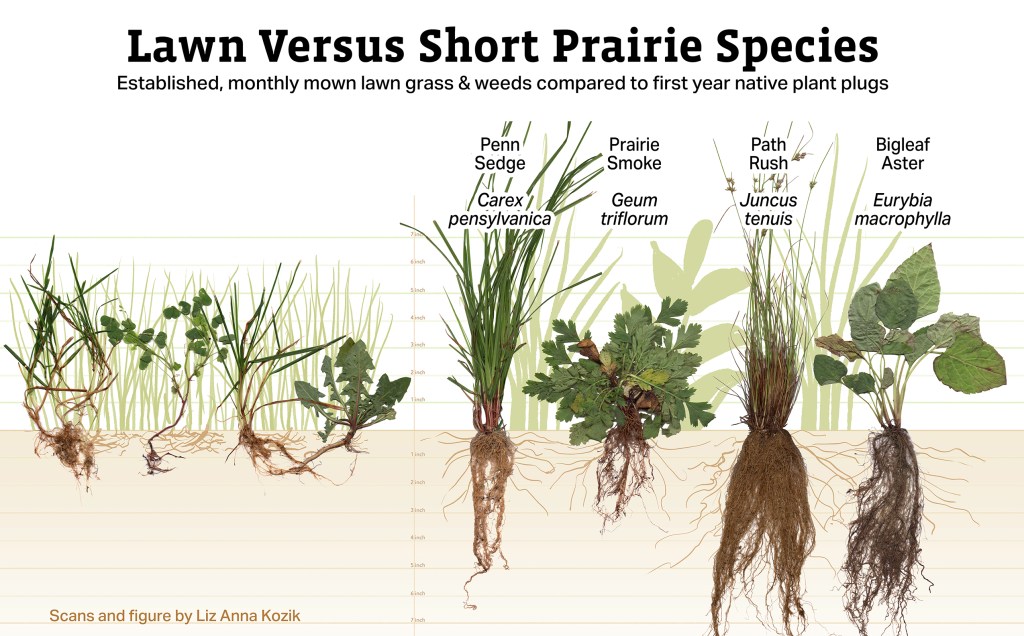
Our native prairie plants are known for having beefy roots while classic Kentucky bluegrass tends to form a shallow mat right at the surface, as in this example the team dug up. The more roots there are, the more carbon they’re depositing underground.
If you want to get into detail, as part of the process of turning sunlight into food, plants absorb CO2 from the air around them. While the oxygen (O2) is released as clean air, the carbon (C) merges with water (H2O) from the ground to form sugar (C6H12O6). Plants then use that sugar to build shoots and roots made of carbon.

