When water falls on to the ground, it can follow a couple different paths. Most commonly, it will hit a surface, and gravity will carry it on to the lowest spot-often people’s basements.
Plants of all sorts, native or otherwise, help slow water and potentially help it enter into the soil instead of flood the neighborhood. Leaves of all sorts give water resistance, while roots give water a path to follow into the ground.
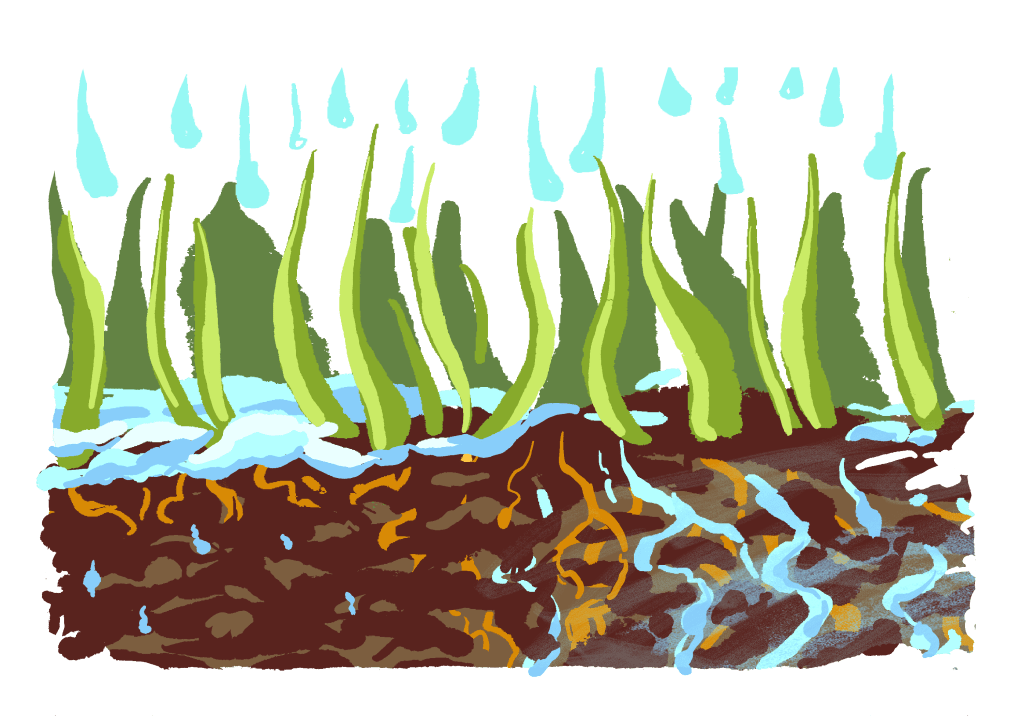
Our native prairie plants are known for having beefy roots while classic Kentucky bluegrass tends to form a shallow mat right at the surface, as in this example the team dug up.
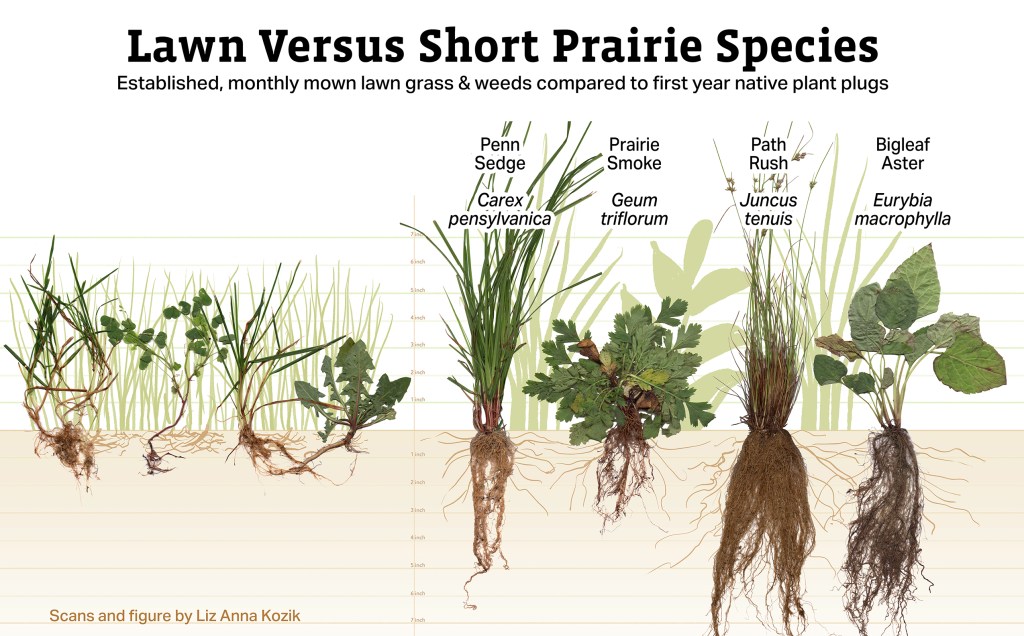
We know in theory from scientific literature that these deeper roots should be providing better water infiltration, but can we prove it?
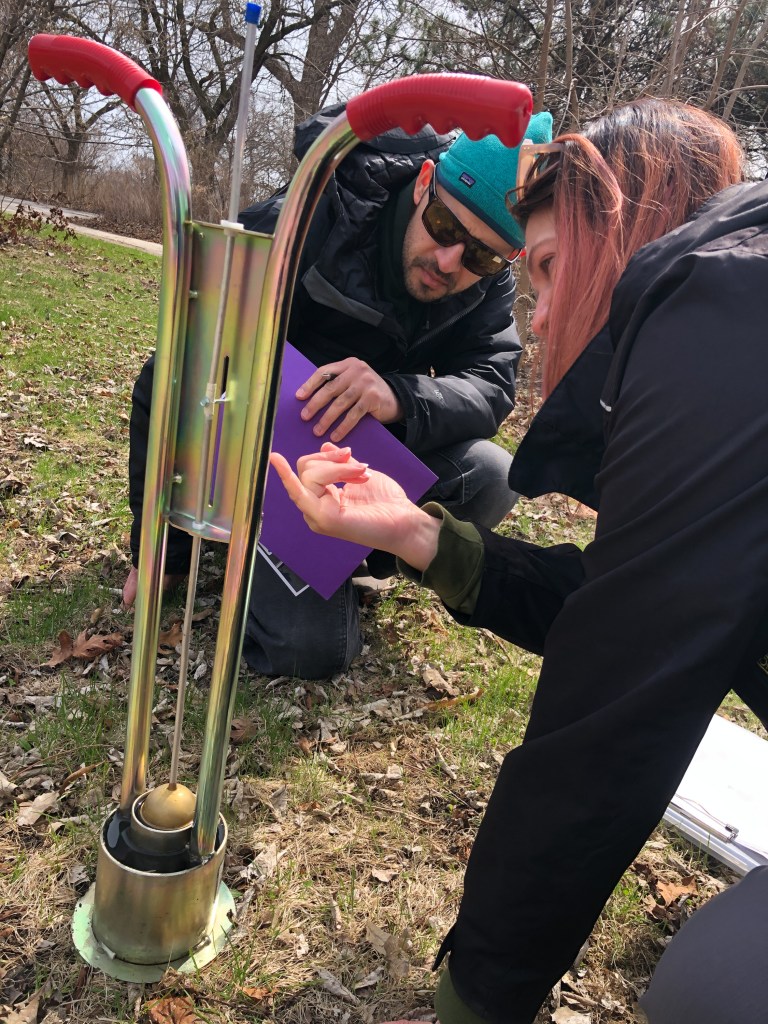
To measure water infiltration, we track the time and speed it takes water to drain into soil. We use infiltrometers to measure this, but you can do it at home with just a coffee can!
Our data is currently looking promising and we’re excited to share what we’ve learned. More news coming as soon as we can process all this data!